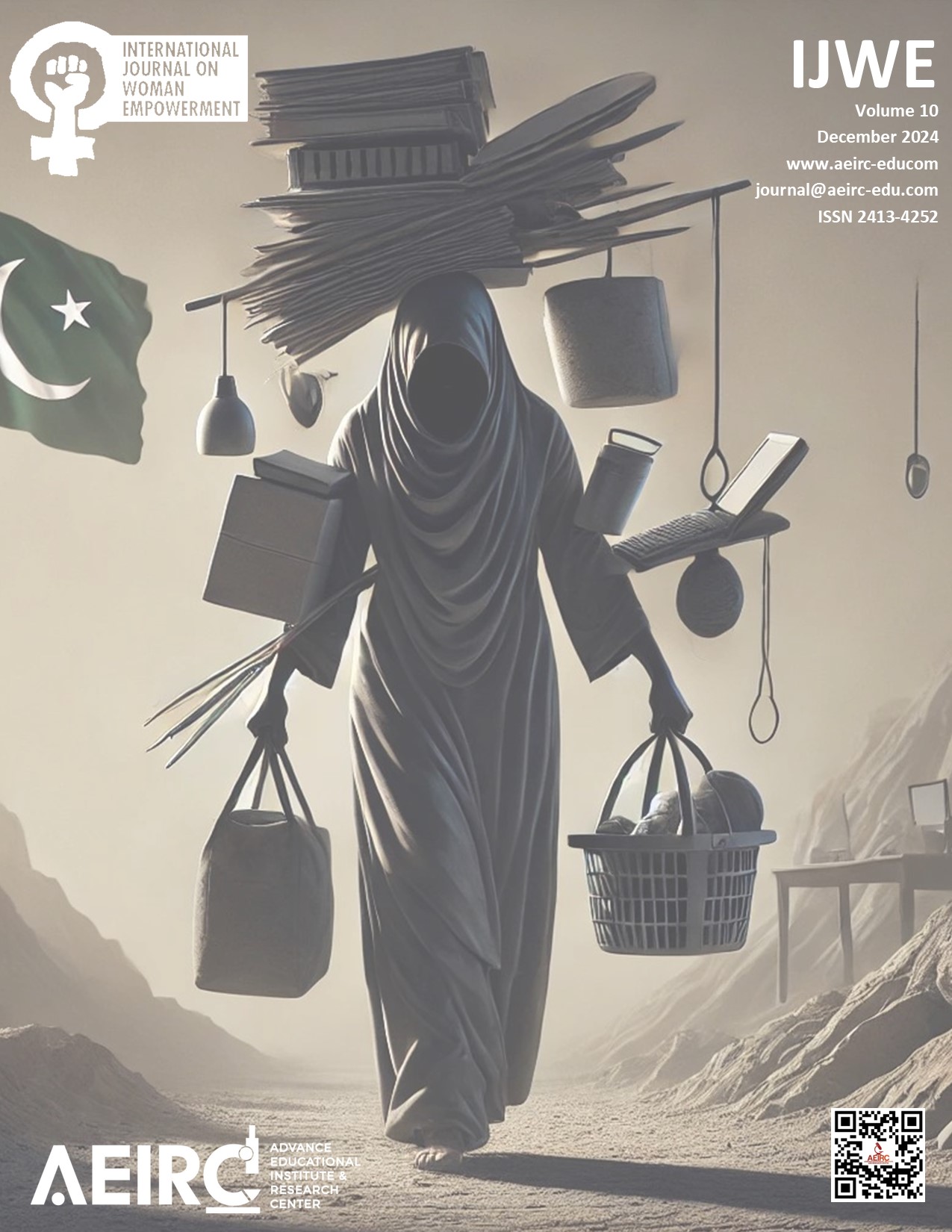
Navigating dual roles: Work-Life balance among married female university teachers in Pakistan.
DOI:
https://doi.org/10.29052/2413-4252.v10.i1.2024.11-17Keywords:
Work-Life Balance, Teaching Profession, Female University Teachers, Professional Factors, Job FlexibilityAbstract
Background: Despite the global increase in female participation in the labor force, achieving work-life balance (WLB) remains a significant challenge, particularly in patriarchal societies such as Pakistan. While existing literature has examined WLB in various contexts, there is a notable lack of research specifically addressing the experiences of married female university teachers who navigate dual responsibilities.
Methodology: This study aims to investigate the professional factors that influence the work-life balance of female university teachers, a demographic within a traditionally family-friendly profession. A quantitative approach was employed, utilizing stratified random sampling to collect data from university teachers ranging from lecturers to professors.
Results: WLB was assessed using the Hayman Questionnaire, rated on a five-point Likert scale, complemented by open-ended questions to gather demographic information and insights into influential factors. Data analysis was performed using SPSS, which included factor analysis and validation through Chi-square and Fisher’s exact tests. The findings revealed a moderate level of work-life balance among university teachers, with job flexibility identified as a significant determinant.
Conclusion: This study provides valuable insights into the work-life balance of female educators in Pakistan and establishes a foundation for future research, particularly within Asian contexts.