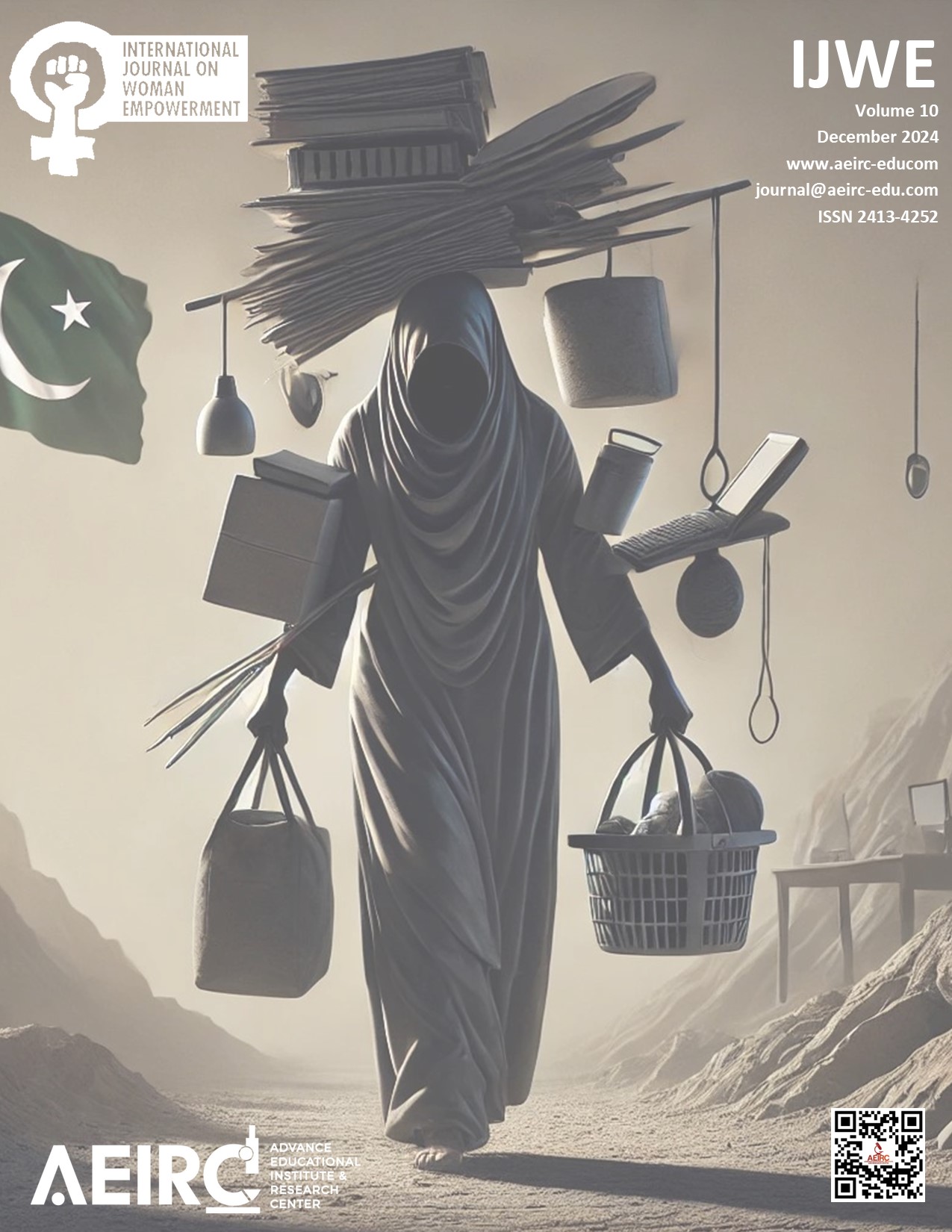
Gender Representation in Global Neuroscience Conferences (2014–2023): Trends, Challenges, and the Inclusion of Pakistani Women
DOI:
https://doi.org/10.29052/2413-4252.v10.i1.2024.34-43Keywords:
Women in Neuroscience, Gender Identity, Organizational CultureAbstract
Background: Neuroscience, like many scientific fields, has been historically dominated by male researchers. In recent years, efforts to increase female representation at international neuroscience conferences have gained momentum. The aim was to analyze gender representation in keynote and symposium roles, poster presentations, and organizing committees across three time periods (2014-2016, 2017-2019, and 2020-2023), and explore the barriers faced by Pakistani women in neuroscience.
Methodology: A mixed-methods approach was employed. Quantitative data from reports on the Society for Neuroscience (SfN), Federation of European Neuroscience Societies (FENS), International Brain Research Organization (IBRO), and regional conferences were analyzed. Descriptive statistics and chi-square tests were used to assess changes in gender representation over time. Qualitative interviews with Pakistani women neuroscientists provided insights into personal challenges and strategies, focusing on issues such as funding, visibility, institutional support, cultural barriers, and networking.
Results: The study found that while female representation in neuroscience conferences has increased, men still dominate key roles. Female participation in keynote speeches, symposiums, poster presentations, and organizing committees has risen from 2014 to 2023, with the most significant increase occurring between 2020 and 2023. However, statistical analysis revealed that men continue to hold the majority in leadership positions. Women face challenges such as insufficient funding, cultural expectations, and lack of institutional support. Despite these barriers, women have used strategies like crowdfunding, mentorship, and international collaborations to overcome obstacles.
Conclusion: Although female representation in neuroscience conferences has grown, men continue to dominate leadership roles. Challenges like funding and institutional support persist, but women have made strides through collaborative efforts.